
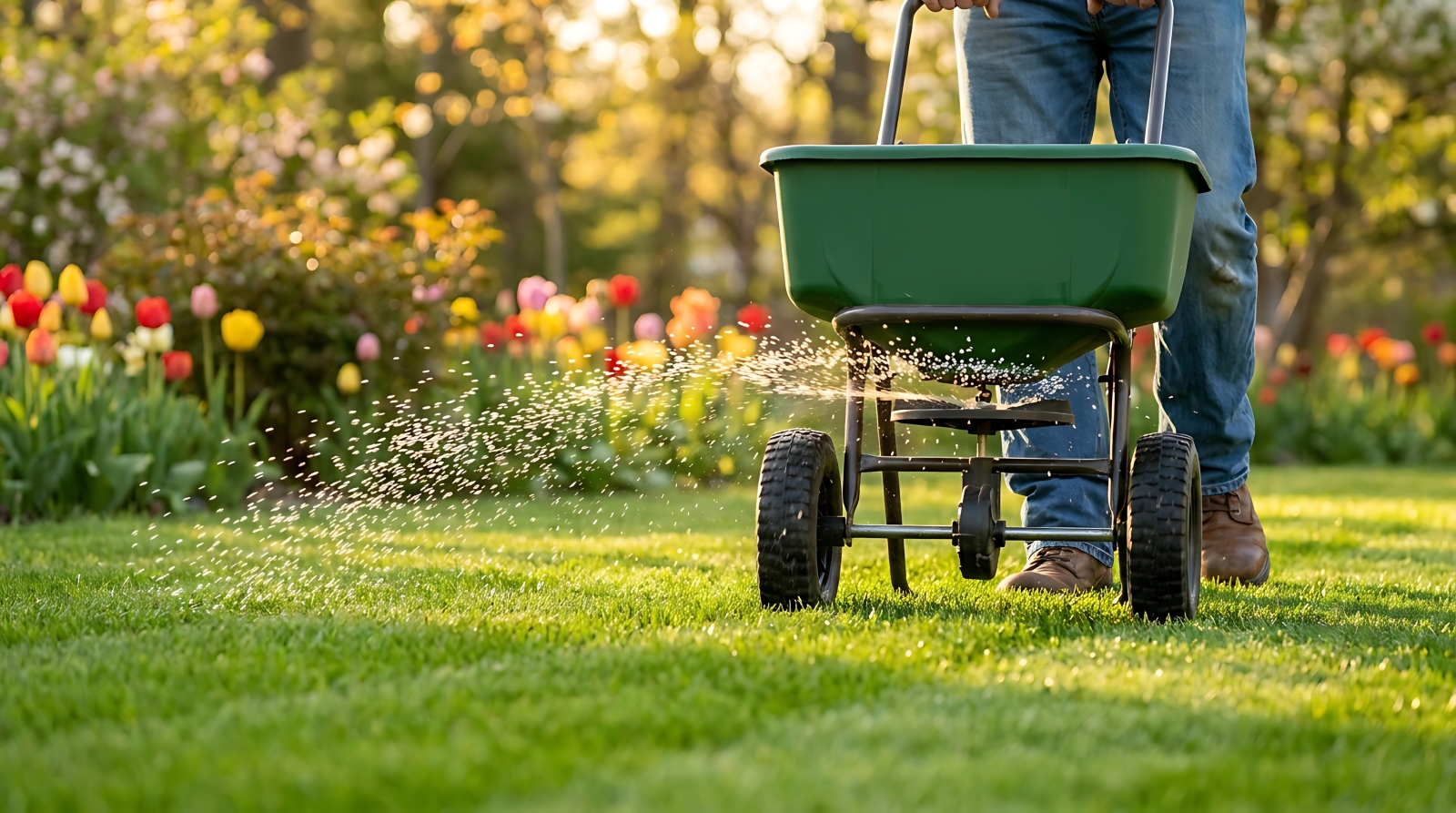
The Last Feeding Before Frost: The Best Fertilizer for Grass in Autumn
Published October 5, 2026 - 6 min read
Most Wisconsin lawns get one more meal before winter — and it might be the most valuable feeding of the whole year. Miss it and you feel the difference next April.
The best fertilizer for grass in autumn is not the same product or timing as your early-fall feeding. This late-season application, often called a winterizer, has a specific job: bank energy in the roots before the ground freezes. Here is what to put down, when to put it down, and the Wisconsin rule that rules out most bagged winterizers on the shelf.
Early-Fall Feeding vs. the Winterizer
There are two distinct fall feedings in Wisconsin, and people confuse them constantly.
The early-fall feeding lands in the two weeks around Labor Day, per the University of Wisconsin–Madison Division of Extension. It drives recovery and root growth while soil is still warm. We cover that one in detail in our guide to fall lawn feeding timing.
The winterizer is the later, second application — the subject of this post. It goes down after top growth slows but while roots are still working, storing carbohydrates the plant lives on through winter and pulls from at spring green-up.
Both matter. This one is about finishing the season right.
When to Apply a Winterizer in Wisconsin
Timing is everything here, and the window is narrower than people think.
Apply in October to early November, after the grass has stopped actively growing on top but before the ground freezes. The biology sets the deadline: once soil temperatures fall below about 40°F, roots stop taking up nutrients, so a late application just washes away.
A practical rule of thumb:
- Right window: grass has slowed, you have mostly stopped mowing, soil is still workable
- Too late: ground is frozen or soil is consistently below 40°F — nutrients can’t reach roots and become runoff
- Avoid: a heavy feeding in early-to-mid October that pushes soft new growth into winter, inviting snow mold
Aim for roughly two to four weeks before your ground typically freezes. In most of southeastern Wisconsin, that means late October into the first half of November.
What to Look For on a Winterizer Bag
“Winterizer” is a marketing word, not a standard formula. Read the analysis, not the front of the bag. Here is what actually matters for a Wisconsin autumn feeding.
| Look for | Why it matters |
|---|---|
| Slow-release nitrogen | Feeds gradually and stores energy instead of forcing a soft growth flush |
| Potassium (the third number) | Drives winter hardiness and cold tolerance, and speeds spring green-up |
| Zero phosphorus (middle number 0) | Required on established Wisconsin lawns — see below |
| No plastic coating | Coated granules leave microplastic behind and add nothing to your soil |
Potassium is the quiet hero of a winterizer. It helps the plant harden off and survive freeze-thaw cycles, which Wisconsin has in abundance.
The Wisconsin Phosphorus Rule (Don’t Skip This)
This trips up anyone buying fertilizer online. Wisconsin restricts phosphorus on established lawns.
Under Wisconsin Statute 94.643, fertilizer containing phosphorus generally cannot be used on established turf, with two exceptions: establishing a new lawn, or a soil test showing a phosphorus deficiency. Many national “winterizer” products still carry phosphorus and are not legal here.
So for a routine fall feeding on an established Wisconsin lawn, the middle number on the bag should be 0. The rule exists to keep phosphorus out of our lakes and rivers — another reason to buy from someone who knows the state’s regulations. Our overview of fertilizing turf under Wisconsin regulations walks through the details.
Why a Peat-Based Winterizer Beats a Coated One
Here is the part most winterizer advice ignores: what the fertilizer leaves behind.
Conventional slow-release products wrap nitrogen in a polymer shell. The plastic meters out nutrients, then stays in your soil after the season ends. Do that every fall and it accumulates.
ProPeat takes a different route. It carries nutrients on sphagnum peat — a carbon-based carrier that releases naturally with soil biology and temperature, no coating required. You get slow-release behavior plus organic matter that improves the soil, exactly when fall root growth can use it. And there is no plastic dumped into the ground going into winter.
For a Wisconsin autumn feeding, that points to a phosphorus-free ProPeat blend:
- ProPeat 10-0-10 — balanced nitrogen and potassium, phosphorus-free, for a standard late-season feeding
- ProPeat N-Less Green — nitrogen-free color and soil support where nitrogen is already sufficient or restricted
Not sure which fits your lawn and timing? Tell us your grass type and soil and we will help you map it. Our full product line and specs list the guaranteed analysis and bag sizes for each blend.
A Note on Soil, Not Just the Lawn
A fall feeding is also a chance to improve the ground itself. Peat adds organic matter, and organic matter is the biggest lever you have over how soil holds water and nutrients — a point the USDA Natural Resources Conservation Service makes about soil health generally.
Feed the soil now and next year’s lawn starts ahead. That is the whole idea behind a soil-forward, plastic-free program.
Winterizer Mistakes We Hear About Every Fall
A few errors turn a valuable feeding into a wasted one:
- Applying after the ground freezes. Below ~40°F soil, roots can’t take up nutrients, and you’ve created runoff instead of a feeding.
- Using a phosphorus product on an established lawn. Restricted in Wisconsin, and rarely necessary.
- Choosing a heavy quick-release nitrogen dump. It forces soft growth right when the plant should be hardening off, raising snow-mold risk.
- Feeding too early and calling it a winterizer. A mid-September feeding is your early-fall application, not the late-season one.
- Buying a “winterizer” made for a warmer state. The formula and phosphorus content may not suit Wisconsin or the law here.
The Bottom Line
The best fertilizer for grass in autumn is a slow-release, potassium-forward, phosphorus-free blend applied in the October-to-early-November window, before the ground freezes. Skip the plastic-coated products, respect the Wisconsin phosphorus rule, and you head into winter with energy stored where it counts — in the roots.
Order your fall ProPeat, or tell us about your lawn and we will recommend the right blend and timing for your soil.
Frequently Asked Questions
What is the best fertilizer for grass in autumn in Wisconsin?
A slow-release fertilizer with potassium for winter hardiness and zero phosphorus (required on established Wisconsin lawns). ProPeat’s phosphorus-free peat-based blends deliver slow release without a plastic coating left in the soil.
When should I apply a winterizer in Wisconsin?
October to early November — after top growth slows but before the ground freezes. Once soil drops below about 40°F, roots stop absorbing nutrients, so a later application is wasted.
Why should the phosphorus number be zero?
Wisconsin Statute 94.643 restricts phosphorus fertilizer on established lawns, with exceptions only for new lawns or a soil-test deficiency. Most established lawns should use a 0-middle-number blend.
Is a winterizer different from my early-fall feeding?
Yes. The early-fall feeding (around Labor Day) drives recovery and root growth in warm soil. The winterizer is a later, energy-storing application before freeze-up.
Does autumn fertilizer help my lawn green up faster in spring?
Yes. The energy and potassium banked in the roots in late fall are what the plant draws on for an earlier, stronger green-up the following spring.