
Core Aeration and Topdressing: Setting Roots Up for Winter in Wisconsin
Published September 21, 2026 - 6 min read
Southeastern Wisconsin sits on a lot of heavy clay, and clay compacts. Add a summer of foot traffic, mowers, and dry spells, and by September the soil under many lawns is dense enough that water runs off instead of soaking in.
Core aeration fixes that, and fall is the right time to do it. Pair it with the right topdressing and you are not just punching holes — you are rebuilding the soil profile before the ground freezes. Here is how the two work together, and what to put down while the holes are still open.
What Core Aeration Actually Does
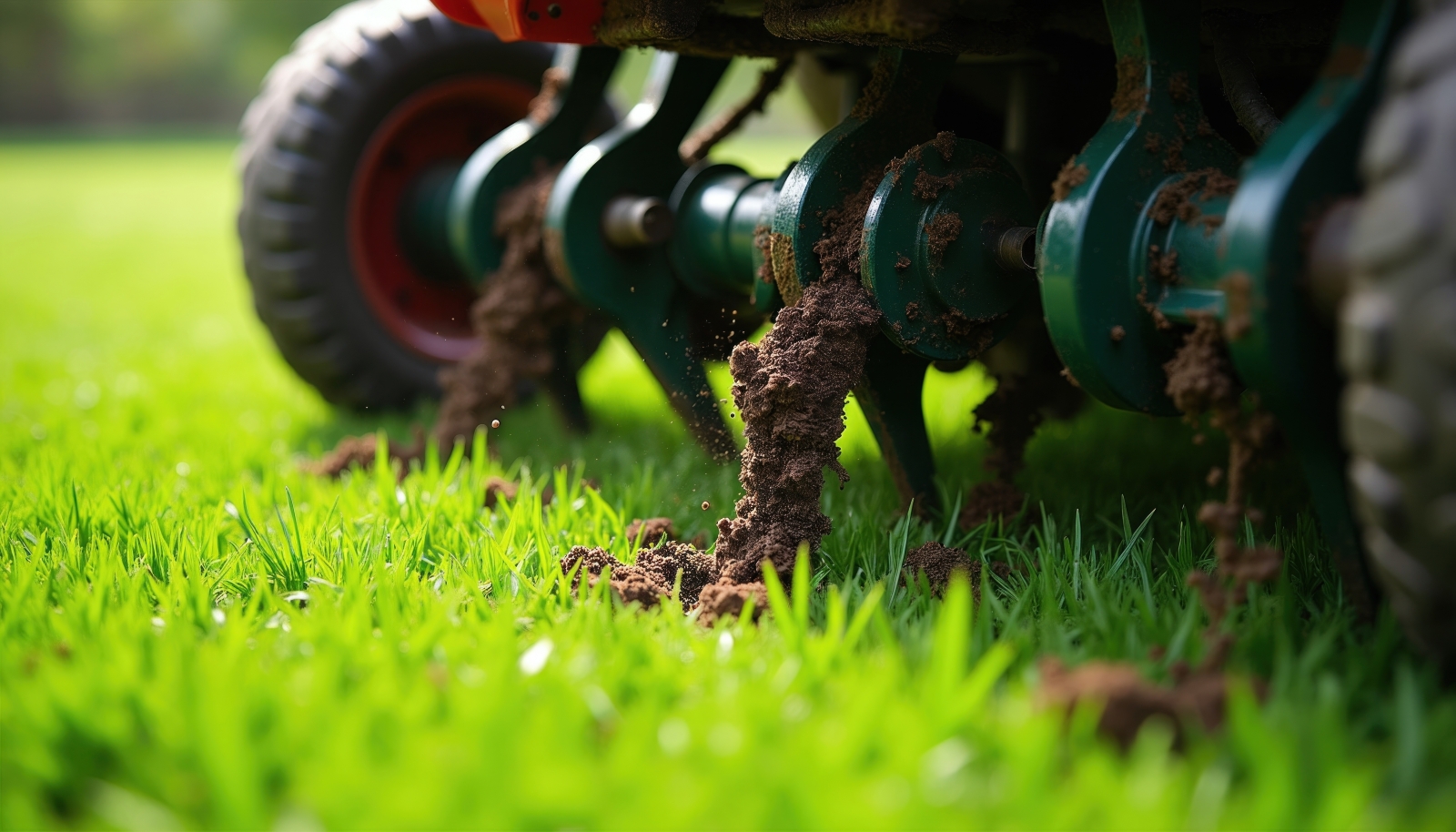
Core aeration pulls plugs of soil and thatch out of the lawn and leaves them on the surface. Those open channels do three things:
- Relieve compaction so roots can push outward instead of hitting a wall
- Open a path for water, air, and nutrients to reach the root zone directly
- Reduce thatch as the plugs break down and soil microbes go to work
Not all aeration is equal. Spike aerators simply punch holes and push soil sideways, which can make compaction worse. Liquid “aeration” products may help soil structure over time but do not physically relieve compaction. If the goal is fixing compacted Wisconsin clay, pull cores.
| Method | What it does | Best for |
|---|---|---|
| Core (hollow tine) | Removes plugs of soil and thatch | Compacted soil, clay, heavy use — the standard |
| Spike | Punches holes, displaces soil | Light use; can worsen compaction |
| Liquid | Conditions soil chemically over time | A supplement, not a replacement |
When to Core Aerate in Wisconsin
Early September through mid-October is the window. Soil is still warm, the grass is actively growing roots, and recovery is fast.
Two conditions matter more than the calendar date:
- Soil moisture. Aerate when soil is moist, not soaked and not bone dry. Dry clay will not release a proper plug; saturated soil smears and re-compacts.
- Growing conditions. Aerate while grass is still actively growing so it can heal the holes before dormancy.
If you are also overseeding, aerate first — seed dropped into open holes gets the soil contact it needs. That pairing is why aeration and fall seeding usually happen in the same visit.
Wisconsin homeowners can rent a core aerator for a weekend, and most local landscape contractors run them all fall. We do not perform the aeration ourselves — we help you decide whether your lawn needs it and what to feed it afterward.
Why Aeration and Topdressing Belong Together
Here is the part that gets skipped. Aeration opens thousands of channels straight into the root zone — and then most people let them close up with nothing but air.
Topdressing right after aeration is the one moment each year when you can get organic matter down into the soil instead of leaving it on top. The material works into the open holes, and you are amending the root zone rather than dusting the surface.
That matters because organic matter is the lever for everything else. The USDA Natural Resources Conservation Service ties higher soil organic matter directly to better water-holding capacity and infiltration — exactly what compacted clay and fast-draining sand both need.
What to Topdress With
Traditional topdressing means compost or a soil blend, spread thin and dragged in. It works, but it is heavy, messy, and hard to apply evenly on a large lawn.
A peat-based fertilizer does double duty. ProPeat delivers nutrients on a sphagnum peat carrier, so a single pass feeds the lawn and puts carbon-rich organic material into those open aeration holes. You are fertilizing and amending at the same time, with a spreader instead of a wheelbarrow.
The practical advantages after aeration:
- Organic matter reaches the root zone through open channels
- Peat holds moisture where new roots are forming
- Nutrients release naturally with soil biology, no plastic coating left behind
- One spreader pass instead of hauling and dragging compost
For the deeper science on why the peat carrier holds water, see our Education Center.
The Fall Sequence, Step by Step
- Mow slightly lower than usual and clear debris so the aerator reaches soil.
- Water a day or two ahead if soil is dry, so tines pull full plugs.
- Aerate in two passes, crossing directions on compacted areas. Aim for dense hole spacing.
- Leave the plugs. They look untidy for about two weeks, then break down and feed the lawn. Do not rake them off.
- Overseed now if the lawn is thin — the holes are ideal seedbeds.
- Topdress and feed with ProPeat while the channels are open.
- Water lightly and often for two weeks if you seeded; otherwise water normally.
For Landscape Crews
If you run aeration routes, fall is your densest four to six weeks. A few notes from the supply side:
- Bundle aeration, overseeding, and a topdressing feed as one service. It is the same trip and a materially better result than aeration alone.
- Spreader-applied topdressing scales. Peat-based granular moves far faster across a route than bulk compost, with no loading equipment.
- Give clients a watering card. Your crew controls the site for an hour; the client controls it for three weeks. Written instructions cut callbacks.
- The plastic-free story sells. Homeowners ask what is going on their lawn. “Peat-based, builds your soil, no plastic coating” is a one-sentence answer competitors are not giving.
We supply ProPeat to landscape professionals across southeastern Wisconsin and to larger accounts statewide. If you want volume and delivery timed to your fall route, become a ProPeat partner.
The Bottom Line
Aeration relieves the compaction. Topdressing decides whether that opening actually improves your soil or just closes back up. Do both in the same fall visit, before the ground freezes, and you head into spring with a deeper, healthier root zone.
Build your ProPeat program — tell us your soil, grass type, and whether you are aerating this fall, and we will help match the products and timing.
Frequently Asked Questions
When is the best time to core aerate a lawn in Wisconsin?
Early September through mid-October. Soil is warm, grass is actively growing roots, and the lawn recovers quickly. Aerate when soil is moist but not saturated.
Should I pick up the plugs after aerating?
No. Leave them on the surface. They break down within roughly two weeks, returning soil and organic matter to the lawn and helping reduce thatch.
Can I aerate and overseed at the same time?
Yes, and it is the ideal pairing. Aerate first so seed falls into open holes with direct soil contact, then topdress and feed. In Wisconsin, target this before mid-September for best seeding results.
What should I topdress with after aeration?
Compost is traditional, but a peat-based fertilizer like ProPeat does both jobs in one spreader pass — nutrients plus carbon-rich organic matter that works down into the open aeration channels.
Does The Lawn Professor perform aeration?
No. We supply ProPeat fertilizer and help you build the right treatment program. You can rent a core aerator or hire a local landscape contractor, and we will advise on what to feed and when.