
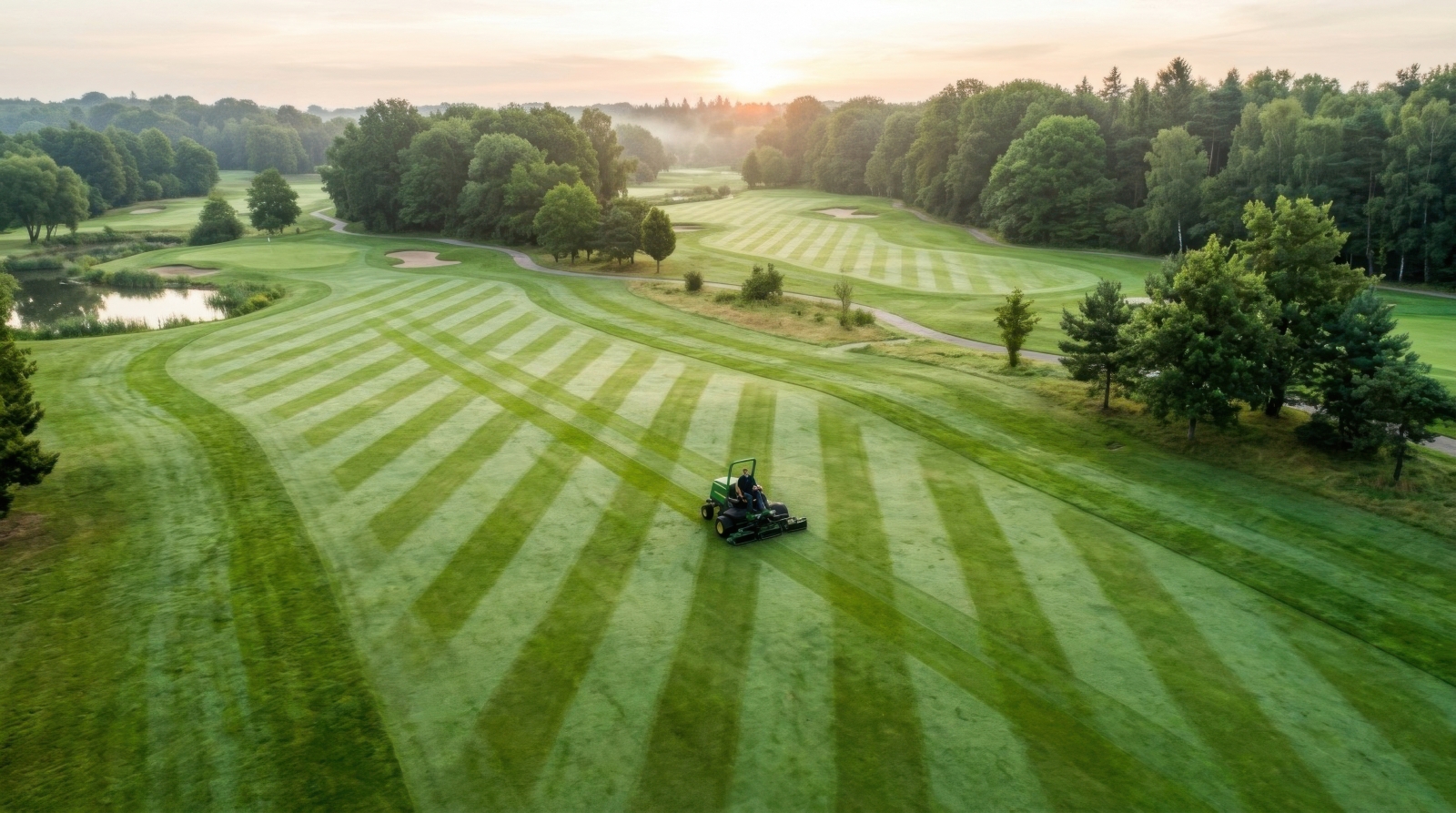
Fall Fertilizer for Golf Courses: Prepping Wisconsin Turf for Dormancy
Published October 20, 2026 - 6 min read
Ask a Wisconsin superintendent when the next season’s turf is really made, and most will tell you: in the fall. What you feed greens, tees, and fairways now decides how the course wakes up in April.
Choosing the right golf course fertilizer for late season is a balance — enough nitrogen to finish strong, enough potassium to harden off, and a clean environmental profile for a course operating under Wisconsin’s nutrient rules. Here is how we think about a fall program, and why a plastic-free carrier belongs on regulated turf.
Why Fall Fertility Drives Next Year’s Course
Cool-season turf does its most important root and carbohydrate work as the air cools and the soil stays warm. Feed it correctly and the plant banks energy for winter survival and a faster, more uniform spring green-up.
Get it wrong — too much late nitrogen, or a soft, succulent canopy going into freeze-up — and you invite winter injury and snow mold. The goal shifts through the season from growth to storage.
A Wisconsin Fall Fertility Timeline
Industry guidance for cool-season golf turf follows a clear arc. As Golf Course Industry and university turf programs describe it, nitrogen leads early and tapers, while potassium carries the finish.
| Window | Priority | Purpose |
|---|---|---|
| Early fall | Nitrogen (with slow-release) | Recovery from summer and aeration, density, color |
| Mid fall | Taper nitrogen | Shift carbohydrate allocation toward roots, not top growth |
| Late fall | Potassium (and where permitted, phosphorus) | Winter hardiness, wear and disease tolerance, spring green-up |
A commonly cited target is moderate soluble nitrogen paired with slow-release, moving toward roughly a 1-to-1 nitrogen-to-potassium ratio as the season closes. The USGA Green Section and regional agronomists tailor the exact rates to grass type, traffic, and soil test.
Potassium is the late-season workhorse. It strengthens cell walls, improves cold tolerance, and sets up quicker recovery the following spring — exactly what a Wisconsin winter tests.
Wisconsin’s Phosphorus Rule Applies to Courses Too
Golf courses are not exempt from the state’s phosphorus restriction. Under Wisconsin Statute 94.643, phosphorus fertilizer is restricted on established turf, with exceptions for establishment and for documented soil-test deficiencies.
Practically, that means late-fall phosphorus should be driven by a soil test, not habit. A current soil test protects both your agronomy and your compliance — and it tells you whether that phosphorus application is justified this year. Our overview of fertilizing turf under Wisconsin regulations covers the specifics.
Why Plastic-Free Matters on Regulated Turf
Most controlled-release golf fertilizers rely on polymer-coated granules. The coating meters nutrients, then remains in the soil as microplastic residue.
For a high-visibility, environmentally regulated property — often with ponds, streams, and public scrutiny — that residue is a liability you don’t need. ProPeat delivers slow-release performance through a sphagnum peat carrier instead of a plastic shell. Nutrients release naturally with soil biology and temperature, and what’s left behind is organic matter, not plastic.
For superintendents, the practical wins line up:
- Uniform, homogeneous granules for consistent coverage across greens, tees, and fairways
- Slow, natural release that reduces surge growth and flush
- Soil-building organic matter that improves moisture retention and structure over time
- A clean environmental story for members, boards, and regulators
Matching ProPeat Blends to a Fall Program
We supply ProPeat in greens-grade and standard particle sizes, with phosphorus-free options suited to Wisconsin’s rules. Depending on your soil test and program stage:
- ProPeat 10-0-10 — balanced nitrogen and potassium, phosphorus-free, for late-season feeding
- ProPeat 7-4-14 SOP — potassium-rich (sulfate of potash), chloride-sensitive, with humic and fulvic acids to raise CEC; a strong fit for hardening turf into winter
- ProPeat N-Less Green — color and soil support without added nitrogen where the canopy is already set
We don’t publish one-size rates, because greens, tees, and fairways each call for different programs. Send us your soil test and turf types and we will build the fall recommendation with you. See the full golf course lineup for specs.
Greens, Tees, and Fairways Aren’t One Program
Treating the whole course with a single fall program leaves performance on the table. Each surface has its own demands heading into winter.
- Greens — the highest-stakes, lowest-mowed turf. Fall favors light, frequent, greens-grade feeding to hold color and density without pushing top growth, plus potassium for crown hardiness on the surfaces that must recover first in spring.
- Tees — high-traffic, divot-prone. They benefit from enough nitrogen for fall recovery and seed fill, tapering into a potassium finish.
- Fairways and roughs — the largest acreage and your biggest budget line. Uniform coverage and efficiency matter most, which is where homogeneous, non-coated granules earn their keep across large areas.
A peat-based carrier suits all three because the release is driven by soil biology rather than a coating that behaves differently across mowing heights.
Water Features and the Runoff Question
Many Wisconsin courses route drainage toward ponds and streams, which puts nutrient management under real scrutiny. Two fall choices reduce runoff risk: slow, natural nitrogen release instead of a soluble surge, and phosphorus applied only where a soil test justifies it. A plastic-free, peat-based program supports both — and gives you a straightforward answer when a board or regulator asks what goes on the turf near the water.
Set Up the Spring Conversation Now
The best fall programs are also the start of next year’s plan. A late-season feeding that banks potassium and protects the crown means less rescue work in spring and a more predictable green-up — which is easier to budget and easier to defend to a board.
If you are evaluating fertilizer suppliers for the coming season, fall is the right time to trial a plastic-free program on a few holes and see the difference before spring bidding.
Request a pro quote or talk to The Lawn Professor about a fall and full-season ProPeat program for your course.
Frequently Asked Questions
When should Wisconsin golf courses apply fall fertilizer?
Follow the season’s arc: nitrogen-forward in early fall for recovery and density, taper nitrogen through mid fall, and finish with potassium in late fall for winter hardiness — before soil cools to the point roots stop taking up nutrients.
What nitrogen-to-potassium ratio is best for fall golf turf?
A common late-season target is moderate soluble nitrogen with slow-release, moving toward roughly a 1-to-1 nitrogen-to-potassium ratio. Tune it to your soil test, grass type, and traffic.
Can golf courses apply phosphorus in Wisconsin?
Only where justified. Wisconsin Statute 94.643 restricts phosphorus on established turf, with exceptions for establishment and documented soil-test deficiencies, so let a current soil test drive any phosphorus.
Why choose a peat-based fertilizer over coated granules for a course?
Peat delivers slow release without leaving polymer/microplastic residue in the soil — a cleaner fit for regulated, high-visibility courses — while adding organic matter that improves soil over time.
Does The Lawn Professor supply golf courses statewide?
Yes. We supply ProPeat to courses across Wisconsin. Send your soil test and turf types and we will build a fall and full-season recommendation.