
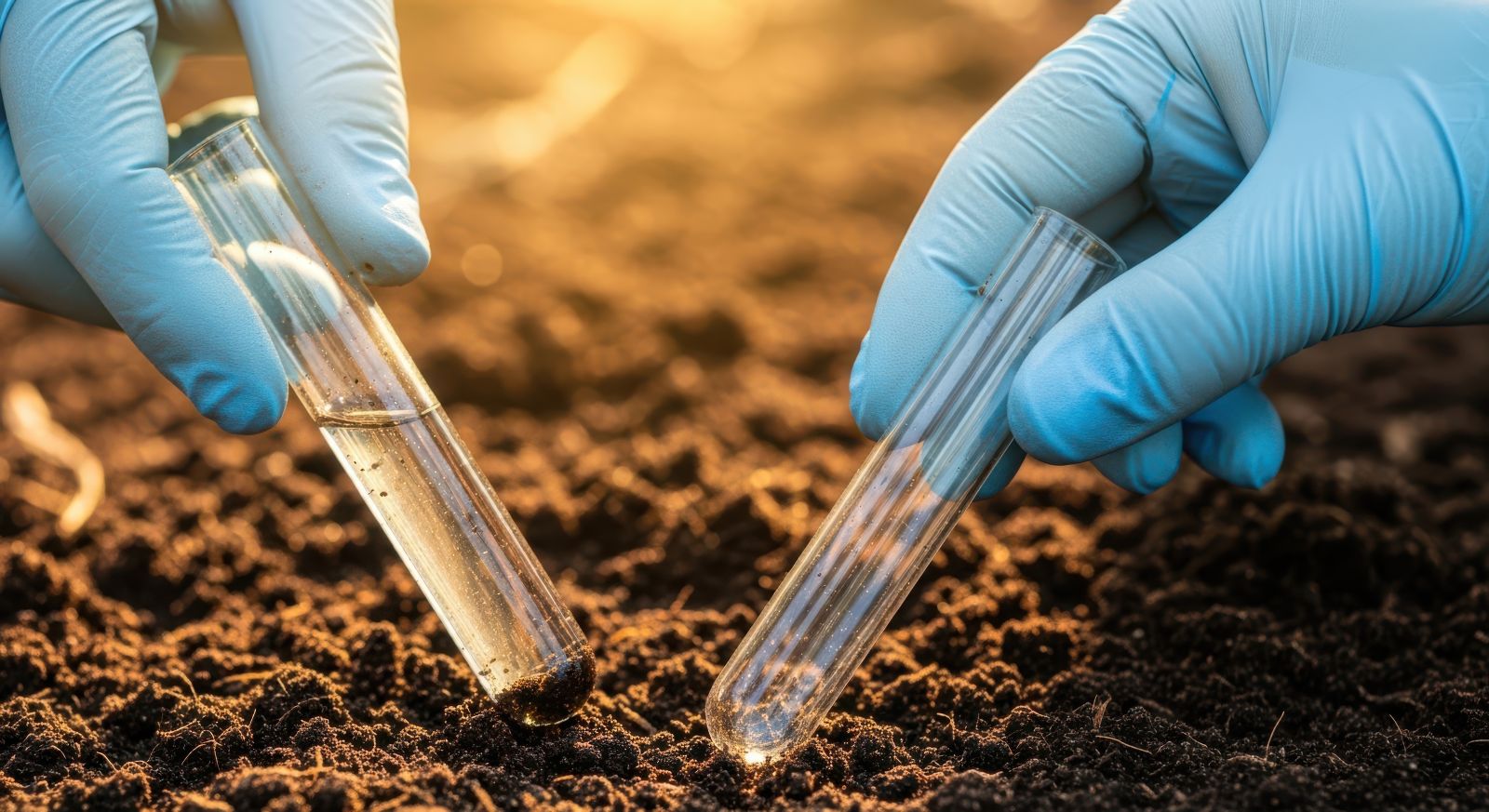
The Science of Moisture Retention: Why Organic-Based Fertilizer Beats Coated Granules
Published July 21, 2026 - 7 min read
Walk across a Wisconsin lawn in mid-July, after two weeks without rain, and you can feel the difference underfoot. One yard crunches. The next stays springy and green. That gap usually comes down to one thing most people never think about: how well the soil holds water — and the kind of fertilizer feeding it.
At The Lawn Professor, we’ve built our ProPeat program around an organic-based fertilizer that works with your soil instead of sitting on top of it. The short version: peat holds water and nutrients, plastic-coated granules do not. Below, we break down the actual science, because when you understand why soil health drives moisture retention, the choice gets easy.
What “Moisture Retention” Really Means for Turf
Moisture retention is your soil’s ability to capture water and hold it in the root zone long enough for grass to drink it. Sandy Wisconsin soils drain fast. Heavy clay soils hold water but choke out roots.
The fix for both extremes is the same: organic matter. Organic matter acts like a sponge, and it is the single biggest lever you have over how your lawn handles heat and drought.
According to the USDA Natural Resources Conservation Service, increasing soil organic matter improves both water-holding capacity and infiltration. More organic matter means more water stored where roots can reach it — and less runoff wasted onto the sidewalk.
How an Organic-Based Fertilizer Holds Water in Your Soil
Here is where the fertilizer you choose stops being a detail and starts being the whole game.
ProPeat uses sphagnum peat as the carrier for its nutrients. Peat is one of nature’s best-known water reservoirs — horticultural sphagnum peat can hold many times its own dry weight in water. When that peat breaks down into your soil, it does three things at once:
- Stores water in the root zone through hot, dry stretches
- Holds nutrients so they feed the plant slowly instead of leaching away
- Feeds soil biology, building the organic matter that keeps the cycle going
This is the “soil-forward” idea in plain terms. You are not just feeding the grass this week. You are improving the ground so it needs less water and less rescue next season.
The Problem With Plastic-Coated Granules
Most conventional slow-release fertilizers work a different way. Manufacturers wrap a nitrogen prill in a polymer shell — essentially a thin plastic coating — that meters out nutrients as it degrades.
The nutrient delivery can be consistent. The leftover, though, is the issue. Those polymer shells do not vanish. They stay in your soil as microplastic residue, application after application.
This is not a fringe concern anymore. The United States has no comparable rule yet — but the European Union’s 2023 microplastics restriction (Regulation (EU) 2023/2055) singled out polymer-coated fertilizers for phase-out, giving manufacturers a transitional period through 2028 to reformulate. This is an EU regulation, not US law. Still, it is a clear signal of where regulatory thinking on coated granules is heading, and regulators flagged the coatings for a simple reason: the plastic accumulates.
Coated granules also do nothing for moisture retention. A plastic shell cannot hold water. Once the nutrients release, the coating is just debris — no organic matter, no sponge, no benefit to your soil’s structure.
How to Spot a Plastic-Coated Fertilizer on the Label
You do not need a chemistry degree to check what you are buying. Before you spread anything, read the bag.
Watch for these terms, which usually signal a polymer or plastic coating:
- Polymer-coated or resin-coated urea (PCU)
- Controlled-release paired with a coated prill
- PCSCU — polymer-coated, sulfur-coated urea
- Granules that look glossy, perfectly uniform, and plastic-like
An organic-based product reads differently. Our ProPeat label points to peat and natural nutrient sources — a carbon carrier, not a coating. When the release mechanism is soil biology instead of a dissolving plastic shell, there is nothing left behind to worry about.
Organic-Based Fertilizer vs. Coated Granules: Side by Side
| Factor | Organic-Based (ProPeat) | Plastic-Coated Granules |
|---|---|---|
| Nutrient carrier | Sphagnum peat (carbon-based) | Polymer / plastic shell |
| Moisture retention | Improves it — peat stores water | None — plastic holds no water |
| Soil health over time | Builds organic matter | Adds no organic matter |
| Leftover residue | Breaks down into soil | Microplastic accumulates |
| Release mechanism | Natural, tied to soil biology | Coating degradation |
| Best for | Lawns, gardens, golf, sports turf, parks | General-purpose feeding |
When you line them up, the tradeoff is clear. Coated granules buy you convenience. An organic-based approach buys you a better lawn and better soil.
Why This Matters More in Wisconsin
Our summers swing hard. A humid June gives way to a dry, stressful July, and shallow-rooted turf pays the price. Grass that sits in soil with strong moisture retention rides out those dry spells with far less irrigation.
Southeastern Wisconsin also throws two soil problems at you at once. Parts of the region sit on heavy clay that holds water but compacts and sheds it in a downpour, while sandier stretches drain so fast that nutrients rush past the roots before the grass can use them. Building organic matter is the one fix that helps both extremes — it loosens clay and gives sand something to hold onto.
That is exactly why we run ProPeat across every property type we serve — from Waukesha and Milwaukee County lawns to golf greens and municipal sports fields. The University of Wisconsin–Madison Division of Extension has long pointed homeowners toward soil health and proper watering as the foundation of drought-tolerant turf. A peat-based feeding program bakes that foundation right into your fertilizer.
Want the deeper version of how it works? Our Education Center covers the soil science behind the program, and our 5-application ProPeat schedule times feeding to the Wisconsin seasons.
Getting the Most From a Peat-Based Program
Fertilizer is one input, not a silver bullet. To capture the full moisture-retention payoff, pair ProPeat with a few basic habits:
- Mow high. Taller turf shades the soil, slows evaporation, and pushes roots deeper.
- Water deeply and less often. Roughly one inch a week, in one or two long soakings, trains roots downward toward stored moisture instead of keeping them shallow.
- Aerate compacted areas. Core aeration opens the soil so water, air, and peat-based nutrients actually reach the root zone.
Do these alongside a season-long feeding schedule and the soil keeps improving year over year — which is the entire point of going soil-forward.
The Bottom Line
If your goal is a lawn that stays green through a July dry spell — and soil that gets better every year instead of quietly filling with plastic — the science favors an organic-based, peat-driven fertilizer. Coated granules feed the grass. Peat feeds the soil, and the soil feeds everything else.
Ready to see the difference on your own turf? Talk to The Lawn Professor and we’ll help you build a plan for your property.
Frequently Asked Questions
Does peat-based fertilizer really improve moisture retention?
Yes. Sphagnum peat holds many times its weight in water and adds organic matter to your soil. Over time, that organic matter raises your soil’s water-holding capacity, so your lawn draws on stored moisture during dry stretches instead of wilting.
Are plastic-coated fertilizers bad for my soil?
The nutrients are fine, but the polymer coatings remain as microplastic residue after the nutrients release. Those shells build up with repeated applications and add nothing to soil structure or water retention.
Is an organic-based fertilizer safe around kids and pets?
ProPeat is a strong fit for spaces shared by families and pets. As with any fertilizer, avoid direct consumption and follow the label directions for the best results.
Can I use a peat-based program on a golf course or sports field?
Absolutely. We run ProPeat on residential lawns, golf turf, parks, and athletic fields. The moisture-retention and soil-health benefits apply to any turf that needs to perform under stress.