
The Most Common Lawn Weeds in Wisconsin (and How to Control Them)
Published July 20, 2026 - 6 min read
Why weeds take hold
Most lawn weeds are opportunists — they move into thin, stressed, or bare spots where the grass is not dense enough to crowd them out. That is why the best long-term weed control is a healthy, well-fed lawn. The treatments below handle what is already there; good fertility and mowing keep it from coming back.
Crabgrass
A fast-spreading annual grassy weed that sprouts from seed each spring and dies off in fall, leaving bare patches behind. The key is prevention: a properly timed pre-emergent stops it before it germinates. Once it is up, it has to be treated as a post-emergent problem.
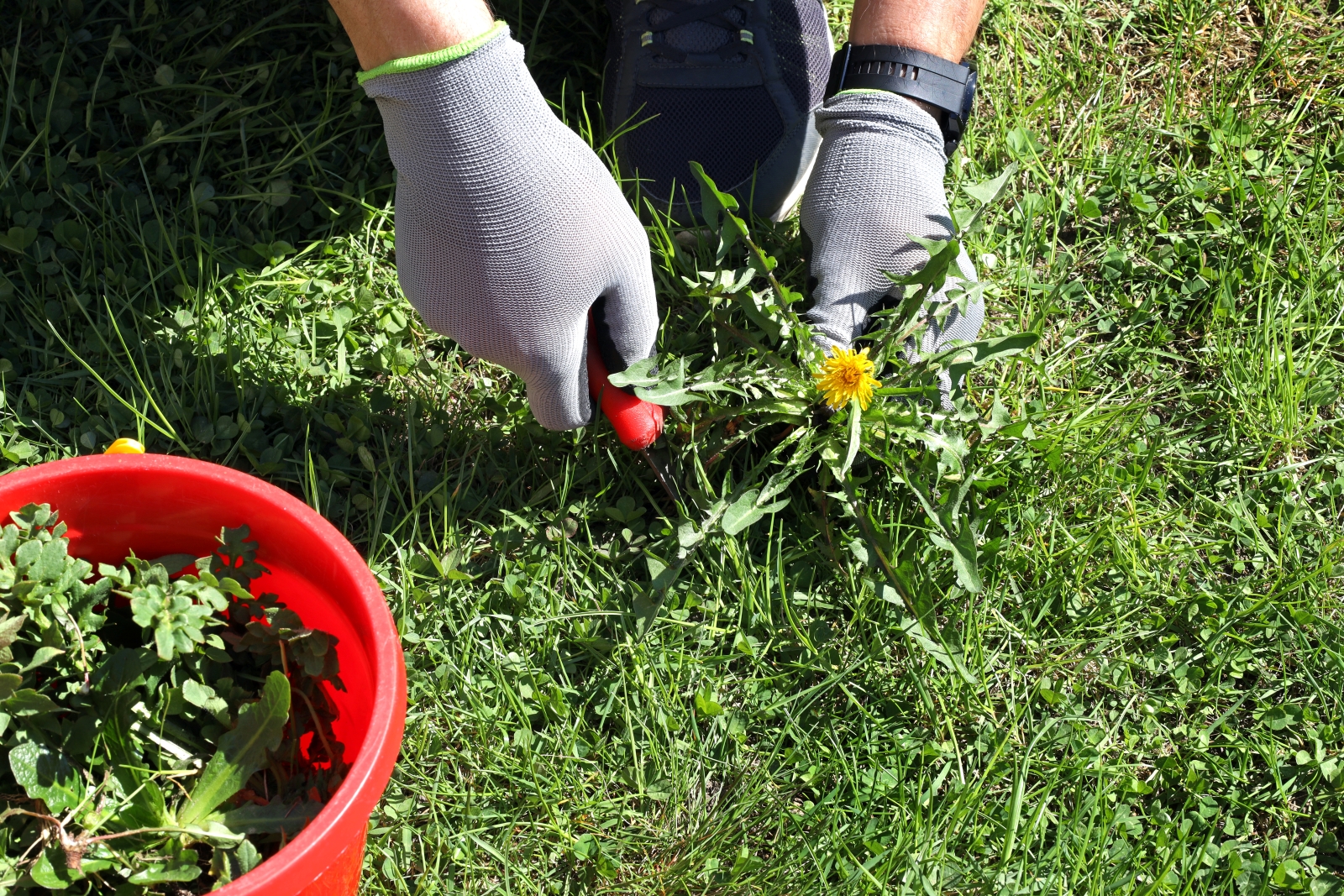
Dandelion
The familiar, yellow-flowered perennial with a deep taproot. Because of that taproot, pulling rarely works for long; targeted broadleaf herbicide during active growth in spring or fall is the reliable route.
White clover
A low, creeping perennial with three-part leaves and white flowers that bees love. It often signals lower nitrogen, so consistent feeding plus targeted broadleaf control keeps it in check.
Creeping charlie (ground ivy)
A persistent, vining perennial with scalloped leaves and a minty smell that thrives in shade and damp areas. It is one of the tougher weeds to control and usually takes well-timed broadleaf treatments, often in fall, plus improving the conditions that favor it.
Broadleaf plantain and nutsedge
Broadleaf plantain forms rosettes in compacted soil and responds to broadleaf herbicide. Nutsedge is a grass-like sedge that grows faster than the lawn in summer and needs a specific sedge-targeted product — standard weed control will not touch it.
The simplest approach
Knowing which weed you have — and whether it is annual or perennial — determines the timing and the product. A treatment program takes that guesswork off your plate by matching the right control to the right weed at the right time of year.
Not sure what is growing in your lawn? Request a free estimate and we will identify it.
Frequently Asked Questions
What Are the Most Common Lawn Weeds in Wisconsin and How Do You Control Them?
The most common lawn weeds in Wisconsin are crabgrass, dandelion, white clover, creeping charlie (ground ivy), broadleaf plantain, and nutsedge. Annual weeds like crabgrass are best stopped with a pre-emergent in spring, while perennial broadleaf weeds are controlled with targeted post-emergent treatments and a thick, healthy lawn.