
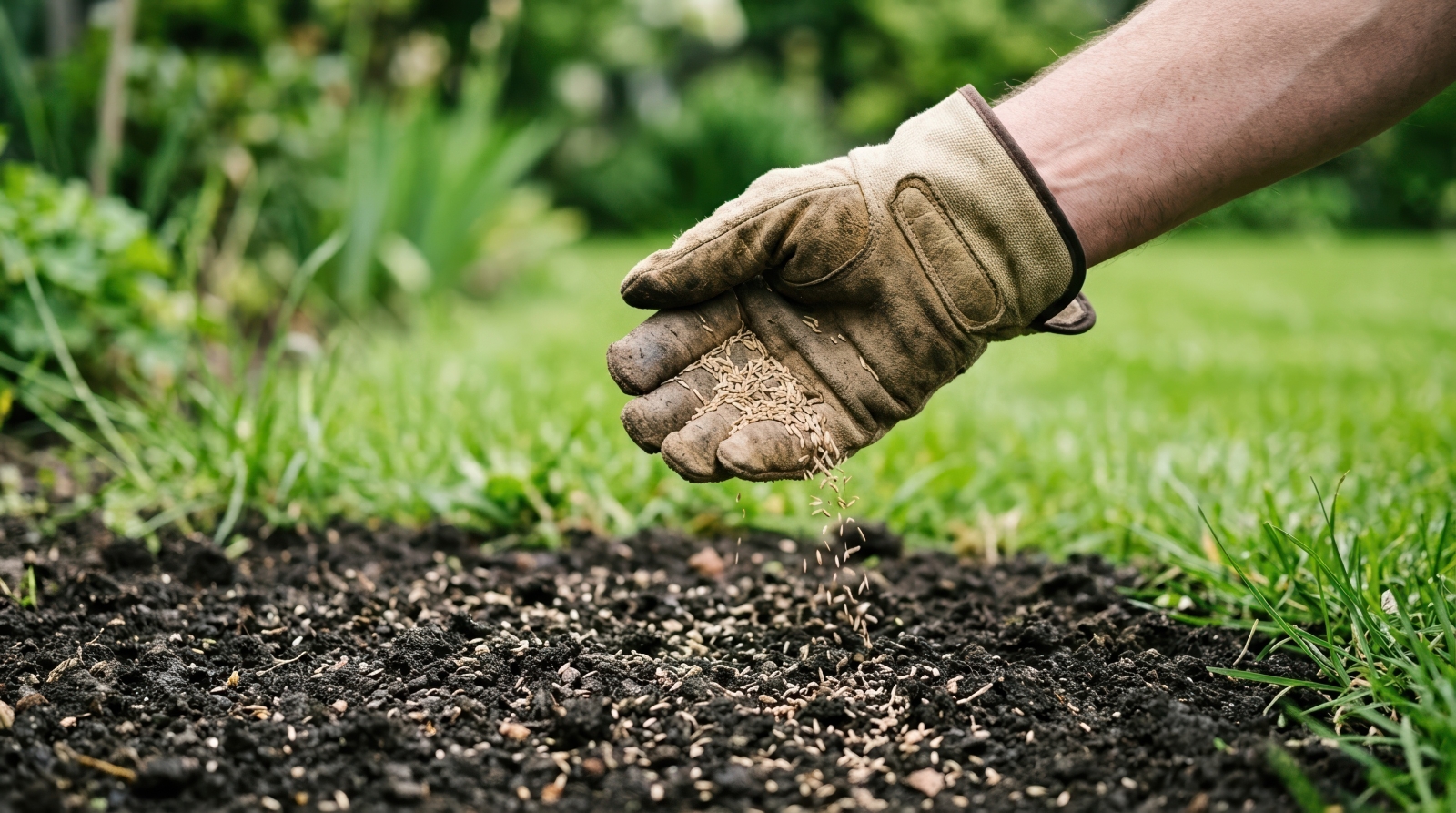
Late August Is Wisconsin’s Best Seeding Window — Here’s the Plan
Published August 4, 2026 - 6 min read
If you have been staring at thin patches all summer, stop waiting. The best two weeks of the entire year to fix a Wisconsin lawn are coming up fast, and most homeowners miss them.
Here is how to overseed a lawn the way we recommend it for southeastern Wisconsin: seed between mid-August and mid-September, pair it with a starter feeding that actually holds moisture at the seedbed, and let fall do the heavy lifting. Get the timing right and you will spend less money on seed than you would chasing bare spots next spring.
Why Late August Beats Every Other Time of Year
Wisconsin gives you a narrow, near-perfect window. The University of Wisconsin–Madison Division of Extension points homeowners to roughly August 15 through September 15 for seeding cool-season lawns, and the reasoning is simple once you see it.
Three things line up at once in late August:
- Soil is still warm. Seed germinates on soil temperature, not air temperature. August soil is warm enough to sprout seed fast.
- Air is cooling off. Seedlings stop fighting the brutal heat that kills spring-planted grass in July.
- Crabgrass is done. Crabgrass germinates in spring. Seed now and your new grass is not competing with a flush of summer weeds.
Spring seeding fights all three of those conditions in reverse. That is why spring lawns so often look great in May and thin out by August.
There is one more advantage people overlook. Grass seeded in late summer spends the entire fall building roots instead of blades. Those roots are what carry the lawn through next summer’s dry stretch.
How to Overseed a Lawn in Wisconsin: Step by Step
Overseeding is not complicated, but the order matters. Skip a step and you waste the seed.
- Mow low. Drop to about 2 inches and bag the clippings. Seed needs to reach dirt, not sit on a cushion of grass.
- Open the soil. Core aerate compacted areas, or dethatch if you have heavy buildup. Seed that never touches soil never germinates.
- Pick the right seed. For most Wisconsin lawns that means Kentucky bluegrass, perennial ryegrass, fine fescue, or a blend. Match the seed to your sun and shade.
- Spread evenly. Use a broadcast or drop spreader and go in two passes at half rate, crossing directions. Hand-scattering leaves stripes.
- Feed it right away. A starter feeding at seeding time supports root development while seedlings are fragile.
- Keep the surface damp. This is where most people fail — details below.
Not sure what your lawn actually needs at step 5? That is the part we help with. Tell us your grass type, soil, and sun exposure and we will map a ProPeat feeding program around your seeding date.
How Long for Grass Seed to Germinate?
This is the question we field most in September, usually from someone convinced their seed failed. Usually it has not — they are just checking too early.
Germination depends on the species and on soil temperature. Here is what to expect when soil sits in the ideal 50–65°F range:
| Grass Type | Typical Germination | Notes |
|---|---|---|
| Perennial ryegrass | 5–10 days | Fastest; often used in blends for quick cover |
| Fine fescue | 7–14 days | Good for shade |
| Tall fescue | 7–12 days | Deep roots, handles drought well |
| Kentucky bluegrass | 14–30 days | Slowest, but spreads and fills in over time |
If you seeded a bluegrass blend, do not panic at day 12. Bluegrass is simply slow. Keep the surface moist and let it work.
Where ProPeat Fits in a Seeding Plan
Here is the part most seeding advice skips. New seed lives or dies on surface moisture, and the fertilizer you choose either helps with that or does nothing at all.
ProPeat carries its nutrients on sphagnum peat instead of a plastic coating. That peat holds water right where a germinating seed needs it — in the top quarter-inch of soil. You are feeding the seedling and improving the seedbed at the same time.
Plastic-coated starter fertilizers do not do that. Once the coating releases its nutrients, the shell contributes nothing to moisture retention and simply stays in your soil. For a deeper breakdown of that difference, see our post on moisture retention and coated granules.
The practical benefit at seeding time:
- Keeps the seedbed from drying out between waterings
- Feeds gently, with no burn risk to tender seedlings
- Builds organic matter that helps the next seeding too
- Safe for lawns shared by kids and pets
Watering: The First Three Weeks Decide Everything
Change how you water. This is the single biggest reason overseeding fails.
Weeks 1–2: Water lightly and often — a short cycle once or twice a day. The goal is a consistently damp surface, not a soaked lawn. If the top layer dries out after the seed has swelled, the seedling dies.
Week 3 onward: Once seedlings are up and you have mowed once, back off to deeper, less frequent watering. Roughly one inch per week in one or two soakings. That change pushes roots downward.
Mow the new grass when it hits about 3 to 3.5 inches, and keep the mower blade sharp. A dull blade rips young seedlings out of loose soil.
Mistakes That Waste Your Seed
These are the ones we hear about every October:
- Seeding onto thatch. No soil contact, no germination.
- Applying crabgrass pre-emergent near seeding time. Most pre-emergents stop grass seed from germinating too. Do not combine them.
- Letting the surface dry out at day 8. The seed swelled, then died. Nothing recovers from that.
- Seeding too late. After mid-September in Wisconsin, seedlings may not root deeply enough to survive winter heave.
- Burying the seed. A quarter-inch of soil contact is plenty. Deeper is worse.
The Bottom Line
Late August through mid-September is the window. Open the soil, spread quality seed, feed it with something that holds moisture instead of leaving plastic behind, and water the surface faithfully for two weeks. Do that and you head into next spring with a thicker lawn and deeper roots than any spring seeding will give you.
Not sure what to feed it, or when? Talk to The Lawn Professor and we will build a ProPeat program around your seeding date and your soil.
Frequently Asked Questions
When is the best time to overseed a lawn in Wisconsin?
Roughly August 15 through September 15. Soil is still warm enough for fast germination, air temperatures are dropping, and crabgrass is no longer competing with your new seedlings.
How long does it take for grass seed to germinate?
It depends on the species. Perennial ryegrass sprouts in about 5 to 10 days, fine fescue and tall fescue in 7 to 14 days, and Kentucky bluegrass in 14 to 30 days when soil temperatures sit between 50 and 65°F.
Do I need to aerate before overseeding?
Not always, but it helps a great deal on compacted soil. Seed must reach actual soil to germinate, and core aeration opens the surface so seed, water, and nutrients get down where they belong.
Can I put down fertilizer at the same time I seed?
Yes, and you should. A starter feeding supports root development while seedlings are fragile. We recommend ProPeat because its peat carrier holds moisture at the seedbed instead of leaving a plastic coating behind.
Is it too late to seed in October?
Usually, yes, in southeastern Wisconsin. Grass seeded after mid-September often lacks the root depth to survive winter freeze and thaw. If you miss the window, wait and plan for next August.