
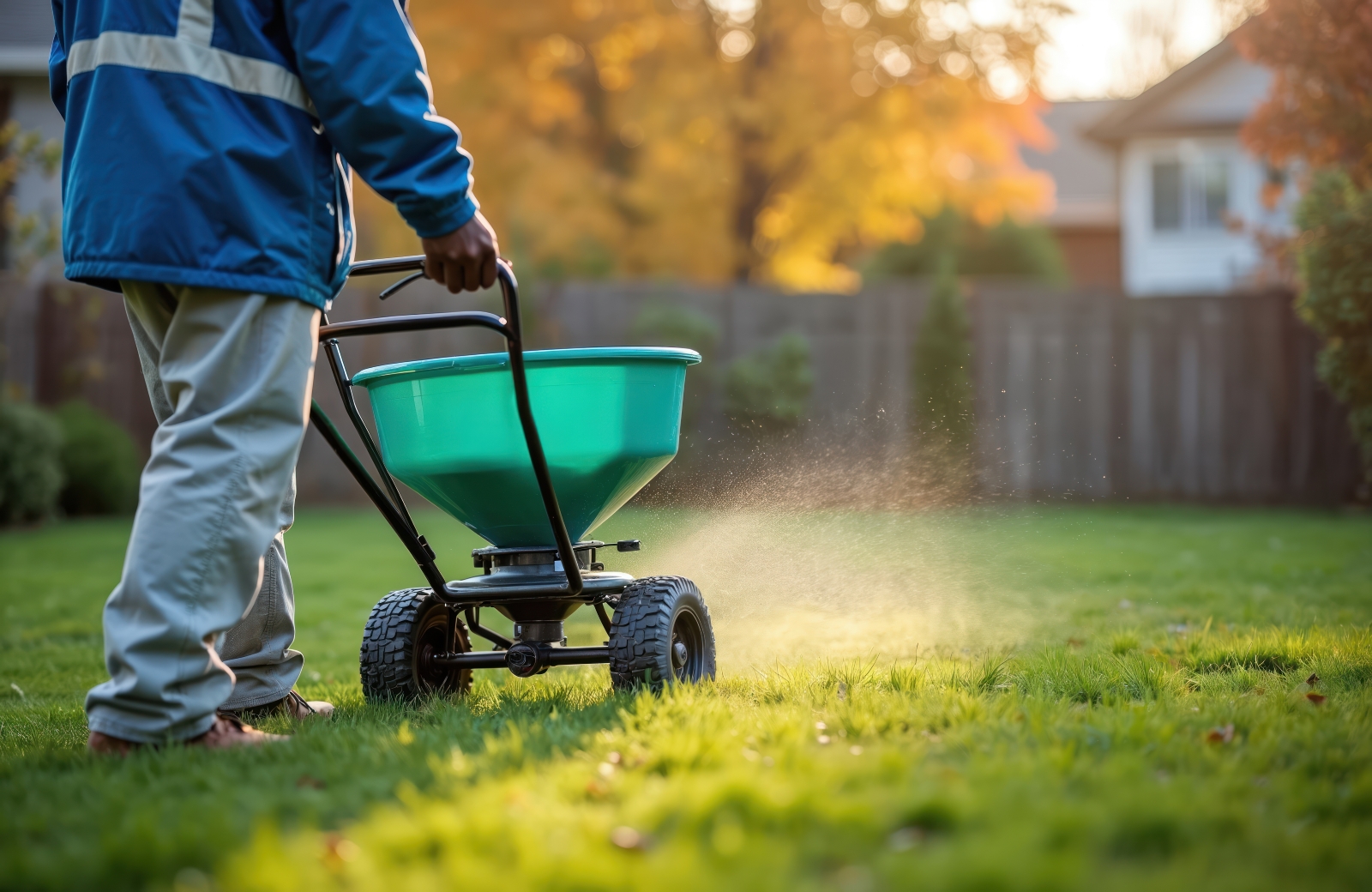
Fertilizer for Landscapers: Build a Recurring Fall Overseeding Program
Published August 20, 2026 - 7 min read
Fall is the easiest season to sell in Wisconsin, and most landscape crews still underuse it. Aeration and overseeding are already on your clients’ minds in late August. The question is what you put down with the seed.
Choosing the right fertilizer for landscapers is not just a cost line. It decides how your seeding jobs look in October, how many callbacks you field, and whether clients ask for the service again next year without being sold. We supply ProPeat to crews across southeastern Wisconsin for exactly that reason.
Why Fall Overseeding Is Your Easiest Add-On
The Wisconsin window is tight and predictable: roughly August 15 through September 15, per the University of Wisconsin–Madison Division of Extension. That gives you a four-week sprint where demand concentrates and scheduling is straightforward.
It sells well for three reasons:
- The problem is visible. Clients have been staring at thin, stressed turf all summer.
- It bundles naturally. Core aeration, overseeding, and a starter feeding are one visit and one invoice.
- Results show up fast. Germination inside two weeks means the client sees the value before the season ends.
That last point matters more than pricing. A seeding job that fills in cleanly is the best renewal pitch you will ever make.
What Crews Actually Need From a Fertilizer
Talk to any operations manager and the priorities are consistent. A fertilizer for landscapers has to:
- Spread consistently so coverage does not stripe across large properties
- Feed without burning tender seedlings, even when an applicator overlaps
- Hold moisture at the seedbed, because surface dry-out is the number one cause of failed seeding
- Be available locally in the volume you need, in the middle of your busiest four weeks
- Give your salesperson something to say that competitors cannot copy
Most conventional starter products handle the first two. The third and fifth are where ProPeat separates.
The Moisture Advantage at the Seedbed
New seed lives or dies in the top quarter-inch of soil. If that layer dries out after the seed swells, the seedling is gone and your crew is going back.
ProPeat carries nutrients on sphagnum peat rather than a polymer coating. Peat holds water exactly where germinating seed needs it. You are conditioning the seedbed while you feed it — with no plastic shell left behind once nutrients release.
For crews, that translates into fewer thin results on properties where the homeowner waters inconsistently. You cannot control your client’s sprinkler habits. You can control how much moisture the seedbed holds on its own.
Why “Plastic-Free” Is a Sales Tool, Not Just a Spec
Homeowners increasingly ask what you are putting on their lawn, especially where kids and dogs play. “Plastic-free, peat-based, builds your soil” is a clear answer that lands in one sentence.
Conventional controlled-release products rely on polymer-coated granules. Those coatings persist in soil as microplastic residue. The United States has no rule restricting them today, but the European Union’s 2023 microplastics restriction singled out polymer-coated fertilizers for phase-out — a signal of where scrutiny is heading, and a talking point your competitors are not using yet.
Give your crews a line clients remember and repeat. That is how referral work starts.
A Simple Recurring Program
The goal is not a one-time fall sale. It is a repeatable annual schedule the client renews without a conversation. Here is the shape we recommend:
| Timing | Service | What You Apply | Client-Facing Benefit |
|---|---|---|---|
| Late Aug – mid Sept | Core aeration + overseeding | ProPeat starter feeding | Thicker turf, fast fill-in |
| Late Oct | Winterizing feeding | ProPeat late-season | Stronger roots through winter |
| April – May | Spring green-up | ProPeat spring feeding | Early color, less crabgrass pressure |
| June – Aug | Summer maintenance feeding | ProPeat + insect control as needed | Holds moisture and color in heat |
Four touches, one product line, one story. Clients understand it, and your team is not relearning a new spec every visit.
Protect Your Results: The Client Watering Handoff
Your crew controls the seedbed for about ninety minutes. The client controls it for the next three weeks. That gap is where most seeding jobs go wrong — and where most callbacks come from.
Leave every client the same short instruction, in writing:
- Days 1–14: Water lightly once or twice a day. Keep the surface damp, never soaked. If the top layer dries out after seed swells, that seed is lost.
- Day 15 onward: Switch to deeper, less frequent watering — about one inch a week — to drive roots down.
- First mow: Wait until new grass reaches 3 to 3.5 inches, and use a sharp blade so seedlings are cut rather than pulled.
A printed card costs pennies and prevents the “your seed didn’t take” phone call in October. It also makes the peat advantage work harder: the seedbed holds moisture between waterings, so a client who misses a day does not lose the job.
Working With a Local Organic Fertilizer Supplier
Sourcing matters in a four-week window. Among organic fertilizer suppliers, most crews are buying from national distribution branches where turf granular competes for attention with irrigation parts and hardscape.
We are Wisconsin-based and focused on one thing: getting ProPeat onto turf that needs it. That means direct conversations about volume, delivery timing, and how the product performs on the property types you actually service — residential lawns, commercial grounds, sports fields, and golf.
If you want the agronomic background before you commit, our Education Center covers the soil science, and our program page lays out how we structure a season-long ProPeat schedule you can adapt for your route.
Getting Started Before the Window Opens
Do this now, not on August 20:
- Confirm your seed and fertilizer volume for the properties already on your fall list.
- Lock delivery timing so you are not sourcing mid-sprint.
- Brief your crews on watering instructions to leave with each client — it protects your results.
- Give your sales team the plastic-free talking point before the first estimate goes out.
Ready to talk volume, pricing, and delivery for this fall? Become a ProPeat partner and we will help you find a supply plan for your fall schedule.
Frequently Asked Questions
When should Wisconsin landscapers schedule fall overseeding?
Target August 15 through September 15. Soil is still warm enough for fast germination, air temperatures are falling, and crabgrass competition has ended. After mid-September, seedlings may not root deeply enough to survive winter.
What should landscapers look for in a starter fertilizer?
Consistent spread, low burn risk on seedlings, moisture retention at the seedbed, and reliable local availability during the short fall window. A product with a story clients understand is a meaningful bonus.
Why does peat-based fertilizer help seeding results?
Germinating seed depends on constant moisture in the top quarter-inch of soil. Peat holds water there, so the seedbed stays damp longer between waterings — which reduces failures on properties where clients water inconsistently.
Can I buy ProPeat wholesale for my crews in Wisconsin?
Yes. We supply landscape professionals across southeastern Wisconsin and serve larger accounts statewide. Contact us to discuss volume, delivery timing, and pricing for your operation.
How is ProPeat different from coated slow-release fertilizer?
ProPeat uses sphagnum peat as a carbon carrier instead of a polymer coating. It releases naturally with soil biology, improves moisture retention, and leaves no plastic shell behind in the soil.