
How Do I Know If My Lawn Has Grubs?
Published July 20, 2026 - 5 min read
The telltale signs
Grub damage often looks like drought at first — irregular brown or thinning patches — but the giveaway is that watering does not bring it back. Because grubs eat the roots, the turf loses its anchor. You may also notice the lawn feels spongy underfoot in affected areas.
The tug test
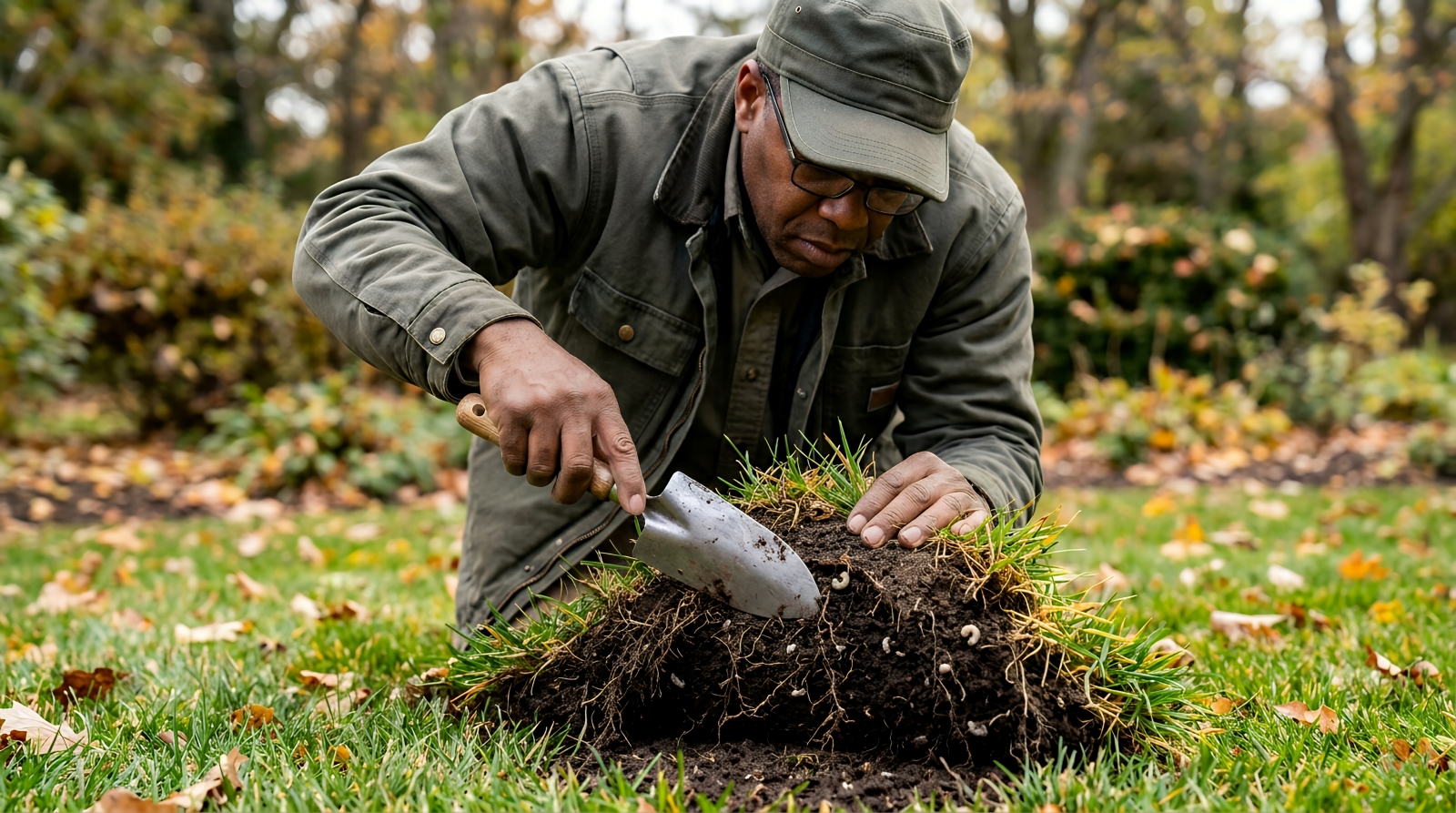
Grab a handful of grass in a suspect patch and pull. A healthy lawn resists; a grub-damaged area lifts up like a loose piece of carpet because the roots have been severed. Peel it back and look at the top inch or two of soil.
What you’re looking for
Grubs are white, soft-bodied, and curled into a distinctive C shape. Finding a few is normal and not cause for alarm, but a high count concentrated in damaged areas points to grubs as the cause. Increased digging by skunks, raccoons, or birds is another strong clue — they are hunting the grubs.
What to do next
If you confirm grubs, the response depends on timing and severity, and it differs from the preventive approach used earlier in the season. The best long-term protection is preventive control applied around mid-summer, before the next generation hatches.
Think you have grubs? Request a free inspection and estimate.
Frequently Asked Questions
How Do I Know If My Lawn Has Grubs?
Signs of grubs include irregular brown patches that do not green up with watering, turf that lifts up like loose carpet because the roots are gone, and increased digging by birds, skunks, or raccoons. To confirm, do the tug test: if the grass pulls back easily, check the soil for white, C-shaped grubs.