
Peat vs Plastic-Coated Fertilizer: What Stays in Your Soil?
Published March 9, 2026 - 7 min read
The hidden difference is the carrier, not just the NPK number
Most buyers compare fertilizers by NPK and price per bag, but the nutrient carrier is just as important. Two products can show similar nutrient analysis and still behave very differently in the soil because the material surrounding those nutrients changes how they are retained, released, and left behind.
Traditional controlled-release programs often rely on polymer or plastic-like coatings. Peat-based programs use organic carbon material as the carrier. Both approaches aim to moderate nutrient delivery, but their long-term soil footprint is not the same.
What happens after application
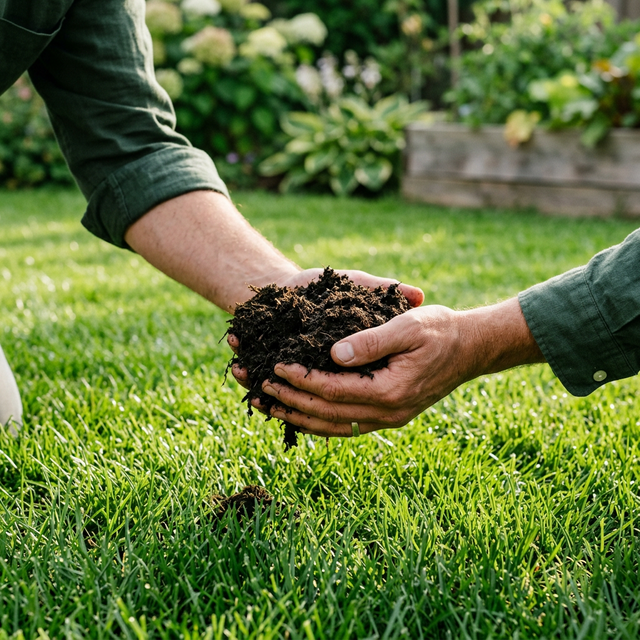
A peat-based granule contributes organic matter as it breaks down. That can support moisture retention and cation exchange over time, especially on sandy or low-organic sites. In contrast, coated systems are designed around the coating wall that controls nutrient movement, and those coating residues can persist beyond the feeding window.
For properties under environmental scrutiny, this distinction matters. Municipal and institutional managers are increasingly asked to evaluate not only immediate turf response, but also what recurring inputs accumulate in the root zone year after year.
How this affects day-to-day turf management
When nutrient release and soil conditioning happen together, crews often see steadier growth and fewer abrupt flushes. That can translate to more predictable mowing demand and fewer stress swings in hot periods. It also gives managers another lever for improving rootzone function without adding separate soil amendment passes as often.
The practical advantage is consistency. Homogeneous granules with a natural carrier support even distribution and reduce the "hot spot versus pale spot" pattern that shows up when nutrient delivery is uneven.
- Compare products by both nutrient analysis and carrier material.
- Track visual response for 4 to 8 weeks after each application window.
- Watch irrigation demand and clipping volume as indicators of release pattern.
- Evaluate rootzone condition at season end, not only color during peak growth.
A better question for long-term programs
Instead of asking, "Which product greens up fastest?" ask, "Which program supports reliable turf while improving soil function over multiple seasons?" That framing helps teams avoid short-term decisions that create long-term cleanup problems.
For many regulated properties, peat-based nutrition is attractive because it aligns performance goals with environmental expectations. You can still build an aggressive turf program, but with fewer tradeoffs between appearance and stewardship.