
Fertilizing Turf Under Wisconsin Regulations
Published March 9, 2026 - 8 min read
Why Wisconsin programs need a different approach
Wisconsin turf managers and homeowners work under some of the most specific nutrient rules in the country. The intent is simple: protect lakes, rivers, and stormwater systems from unnecessary nutrient loading. In practice, that means your fertilizer plan has to match soil need, turf condition, and season instead of following a one-size-fits-all schedule.
For most properties, the biggest planning issue is phosphorus. Many established lawns do not need routine phosphorus applications, and in many cases they are restricted unless you are seeding, establishing new turf, or correcting a documented deficiency. A compliant strategy starts with identifying where phosphorus is justified and where phosphorus-free products are the right default.
Start with site data, not product marketing
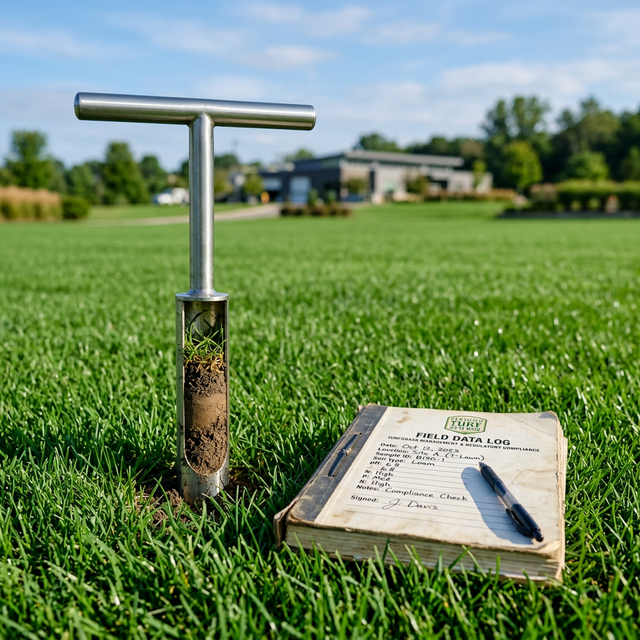
Before selecting a blend, gather three baseline inputs: soil test results, turf age, and current stress level. Soil tests identify whether phosphorus and potassium are truly needed. Turf age tells you if the stand is in establishment mode or maintenance mode. Stress indicators like thinning, compaction, and color loss help you prioritize root support versus cosmetic green-up.
This baseline keeps your program compliant and efficient. Instead of over-applying "just in case," you can match blends to actual agronomic need. That reduces waste, lowers runoff risk, and often improves consistency because nutrients are delivered where the turf can actually use them.
Build a compliant three-window schedule
A reliable Wisconsin schedule typically uses three windows: spring recovery, early-summer support, and fall strengthening. For established turf where phosphorus is not required, phosphorus-free blends such as 17-0-4 or 10-0-10 are usually the starting point. When establishing new turf, a balanced starter blend can be justified in the seeding window.
Application timing should avoid heavy rain forecasts and frozen ground. Even a well-selected blend can become a compliance and performance problem if applied just before runoff events. Spacing applications across the season improves plant uptake and avoids sharp nutrient peaks.
- Use documented soil need to justify phosphorus applications.
- Apply to dry turf and water in with at least 0.2 inches after spreading.
- Keep product off hard surfaces and sweep granules back onto turf immediately.
- Record date, area, blend, and rate for each application.
Rate discipline matters as much as blend selection
Most turf issues tied to fertilizer are rate issues, not product issues. Calibration errors, overlap at turn points, and inconsistent walking speed can all create non-compliant over-application areas. On large sites, a calibration check before each major window can prevent avoidable callbacks and visual striping.
For teams managing parks, schools, or golf properties, rate discipline also simplifies audits and reporting. Clear records paired with calibrated equipment make it easier to show that your nutrient plan is both defensible and effective.
Compliance and turf quality can coexist
The best Wisconsin fertilizer programs are not minimal programs; they are intentional programs. They combine the right source, right rate, right timing, and right placement with realistic expectations for each season. That approach protects water quality while still producing dense, resilient turf.
If you want fewer corrections during the year, start by tightening your spring planning: verify soil need, select blends by site purpose, and commit to accurate rates. That one change usually improves both regulatory confidence and in-season turf performance.