
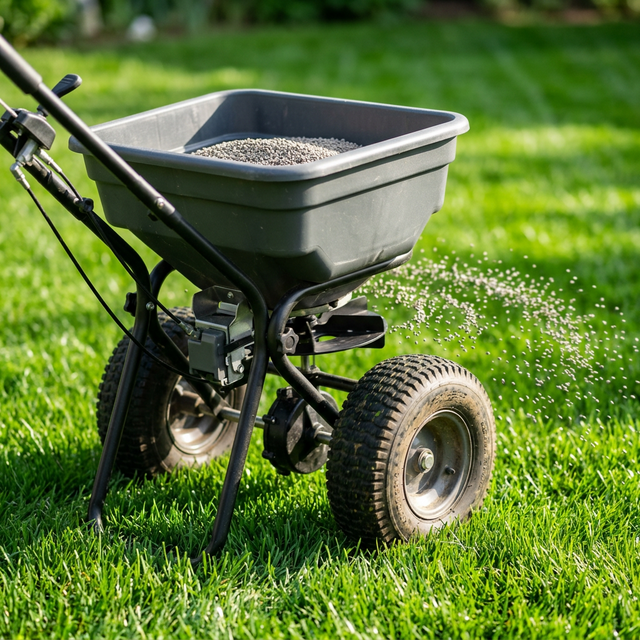
Fertilizer Application Mistakes That Cause Patchy Turf
Published March 9, 2026 - 6 min read
Patchy turf is usually an execution problem
When turf greens unevenly after an application, many teams blame the fertilizer immediately. In reality, patchiness often comes from avoidable execution issues: poor calibration, overlap at turn points, skipped passes, or inconsistent walk speed. Correcting those variables can improve results without changing products.
The good news is that most of these errors are procedural. Once your crew uses a consistent pre-application checklist, quality improves quickly and repeatably.
The four mistakes that show up most often
First, spreader settings are not validated for the actual product and granule size. Second, operators vary pace and overlap, especially around edges and curves. Third, product lands on hard surfaces and is not recovered, wasting nutrients and increasing runoff risk. Fourth, watering-in is delayed or uneven, slowing nutrient movement into the root zone.
Any one of these can create visible striping or blotchy response. Together, they can make a good program look unreliable.
A simple application quality system
Use a small quality system before every major pass. It does not need software or complicated forms. A one-page checklist and a five-minute calibration check are enough for most sites.
- Verify spreader setting and test output on a known area.
- Map your pass pattern before starting, including turn strategy.
- Assign one pace target and maintain consistent overlap.
- Sweep hard surfaces immediately after spreading.
- Water in uniformly the same day when conditions allow.
Train for consistency, not speed
Experienced crews move fast because they are consistent, not because they rush. Focus training on edge technique, turn behavior, and pace control. These small mechanics are where most visible defects begin.
On high-visibility sites like parks entrances, athletic fields, and golf approaches, it can help to run a brief post-application inspection before equipment leaves the property. Catching one overlap issue early saves weeks of uneven color complaints.
Better process, better turf, fewer callbacks
Application consistency is one of the highest-return improvements in turf operations. It improves aesthetics, reduces waste, and protects environmental compliance at the same time.
If patchy response has been a recurring issue, begin with calibration and pattern control. Those two fixes solve more problems than most product switches.